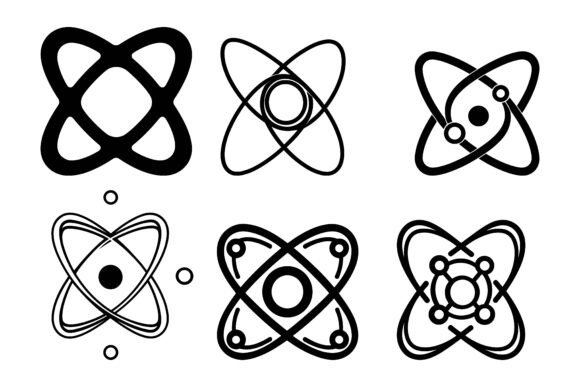
Molecules and Atoms Symbols in Digital Illustration: A Practical Guide to the AI EPS Collection
In the world of visual communication, the microscopic building blocks of matter—molecules and atoms—have long served as powerful metaphors for structure, connection, and fundamental truth. Whether you're designing an infographic about chemical reactions, crafting an icon set for a biotech startup, or building an educational app that explains the periodic table, you need visual assets that are both scientifically accurate and aesthetically compelling. The Molecules and Atoms Symbols collection within the Hello Welcome to our Special AI EPS Collections delivers exactly that: a versatile, professionally crafted set of illustrations designed to meet the needs of creators across industries. But what truly sets this AI EPS illustration set apart? It's not just the subject matter—it's the thoughtful construction, the adaptability, and the sheer usability baked into every file.
From Scientific Concept to Visual Language
At the core of any good illustration set is a clear understanding of its subject. The molecules and atoms symbols in this collection aren't generic circles and lines—they represent a considered interpretation of chemical structures, bonding patterns, and atomic models. Each symbol is designed to be recognizable without being overly technical, making it suitable for audiences ranging from laboratory researchers to elementary school students. The set includes representations of simple diatomic molecules, complex organic structures, atomic orbitals, and periodic table elements, all rendered with a consistent visual style that ensures they work together seamlessly in a single project.
For example, if you're building an infographic explaining the water cycle, you can pull a water molecule symbol from this set and place it alongside atmospheric icons, confident that the line weights, color palette, and level of detail will match. This consistency is a hallmark of professional design work, and it's one of the primary reasons why this AI EPS illustration set stands out.
The File Package: What You Actually Get
Understanding what's inside the download is crucial for planning your workflow. Each purchase includes files in three formats: AI, EPS, and JPG. Here's what each format brings to the table:
- AI (Adobe Illustrator) — The native editable format. Perfect for designers who want to tweak every anchor point, recolor entire groups, or add their own typography. The layers are neatly organized and named logically, so you can find the atom you need without digging through a mess of unnamed layers.
- EPS (Encapsulated PostScript) — A universal vector format compatible with most vector editing software, including CorelDRAW, Affinity Designer, and even older versions of Illustrator. This ensures cross-platform usability for both Mac and Windows users.
- JPG (Joint Photographic Experts Group) — A high-resolution raster preview. Useful for quick mockups, web previews, or use in presentation software that doesn't handle vector files natively. The JPG is provided at print-quality resolution, so you can drop it into a pitch deck without worrying about pixelation.
The set is designed with both Mac and Windows users in mind. Files are saved in standard formats that open without font conflicts or missing plugin errors. The layer structure follows a logical hierarchy: each symbol sits on its own layer, with sub-layers for fills, strokes, and shadows. This makes it easy to isolate an element, change its color, or apply a global edit across multiple symbols at once.
What Makes This Illustration Set Special for You
When you work with visual assets day in and day out, small details make a big difference. Here are the characteristics that elevate this collection from a simple clipart pack to a professional-grade toolkit:
Perfection in Details and Consistency
Every atom symbol uses the same stroke weight. Every molecule has consistent bond angles. The shading is uniform across the entire set. This attention to detail means you can combine any two symbols from the collection and they will look like they were designed for the same project—because they were. For educators creating multi-page worksheets or app developers building a suite of science-related icons, this consistency is invaluable.
Ease of Editing and Customization
The files are structured with editing in mind. Want to change the color of all carbon atoms from dark gray to blue? Select the layer labeled "Carbon Atoms" and apply a new fill. Need to rotate a molecule for a specific layout? The symbol is grouped but not locked, so you can rotate, scale, or skew it without breaking the design. Each element is built from simple vector shapes—circles, lines, arcs—so even beginners can modify them with confidence. The set includes a legend or reference layer (depending on the version) that shows the original color scheme, making it easy to restore defaults if you experiment too far.
Suitability Across Media
These symbols are vector-based, which means they scale from a 16-pixel app icon to a 10-foot banner without losing quality. The JPG version is provided at 300 DPI, ready for print. Whether you're producing a glossy brochure for a chemistry conference, a set of flashcards for remote learning, or an interactive SVG for a web-based periodic table, you have the right format ready to go. The set is equally at home in print, web, symbol libraries, mobile apps, and infographics.
Use Cases Across Different Industries
To truly appreciate the versatility of these Molecules and Atoms Symbols, let's look at how different professionals might put them to work:
- Educators — Create clear, engaging worksheets and presentations for science classes. Use the atom symbols to illustrate electron shells, or combine molecules to show covalent bonding. The consistency helps students focus on the concept, not the visual noise.
- Healthcare and Biotech Marketers — Develop infographics that explain drug mechanisms, metabolic pathways, or genetic structures. The professional look of these symbols adds credibility to your materials without requiring a in-house illustrator.
- App and Web Developers — Integrate the symbols as icons in science education apps, lab management software, or chemical reference tools. The scalable vector format ensures crisp display on retina screens and high-density displays.
- Graphic Designers — Use the set as a starting point for custom illustrations. Because the files are editable, you can deconstruct a molecule and rebuild it into a unique visual for a brand identity or packaging design.
- Researchers and Academics — Enhance presentations and posters with accurate, attractive molecular symbols. The set saves hours of manually drawing structures in chemical drawing software, especially for non-standard presentations.
Workflow Integration and Practical Implementation
Bringing these symbols into your existing workflow is straightforward. After downloading, unzip the folder and open the AI or EPS file in your preferred vector editor. The layer panel will show clearly named groups such as "Atom_Carbon", "Atom_Oxygen", "Molecule_Water", and "Bond_Single". You can drag individual symbols directly into your working document, or use the entire file as a symbol library.
For those using Adobe Illustrator, you can open the file and drag the symbols into the Symbols panel for easy reuse. If you're working in a software that doesn't support symbols natively, simply copy and paste the grouped objects. The JPG preview is useful for quickly identifying which symbol you need before opening the vector file—a small but thoughtful time-saver when you're working under deadline.
The color palette uses a neutral but flexible scheme: grays, whites, soft blues, and reds for oxygen, with clear differentiation between element types. If your project has a specific brand palette, you can use the "Recolor Artwork" tool in Illustrator (or similar features in other software) to update the entire set in seconds. The logical naming and grouping makes this possible without hunting for individual objects.
Considerations Before You Buy
No product is perfect for every scenario, and being transparent about limitations helps you make an informed decision. This set focuses on stylized, clean representations of molecules and atoms. It does not include detailed 3D renderings, ball-and-stick models with realistic shading, or space-filling diagrams. If your project requires photorealistic molecular visualization, you may need a specialized 3D modeling tool. However, for the vast majority of educational, marketing, and interface design needs, the stylized approach is actually preferable—it's more readable at small sizes, easier to modify, and works better in flat-design interfaces.
Additionally, while the set covers a broad range of common atoms and molecules (hydrogen, oxygen, carbon, nitrogen, water, carbon dioxide, methane, and several others), it is not an exhaustive database of every known compound. If you need a highly specific or rare molecule, you may need to build it from the provided atomic components or supplement with another source. That said, because the atomic symbols are modular, you can combine them to create your own custom molecules—the building blocks are all there.
Tips for Getting the Most Out of Your Download
Once you have the files, here are a few practical strategies to maximize their value:
- Create a master symbol library. Import all the AI symbols into a dedicated Illustrator file and save it as a library. This way, you can access any atom or molecule from the Symbols panel across all your projects.
- Experiment with color variations. Use the set's neutral palette as a base, but try applying a monochromatic scheme for sleek infographics or a bright, playful palette for children's educational materials. The clean vector shapes handle any color change beautifully.
- Combine with other icon sets. Because the line weights and style are classic and understated, these symbols pair well with most modern flat-design icons. They won't clash with your existing visual library.
- Use the JPG for rapid prototyping. When you're in the early stages of layout design, drop the JPG versions in place to test composition. Swap to the vector files when you're ready for final production.
- Scale wisely. While vectors can scale infinitely, consider the minimum size for legibility. At very small sizes (under 16 pixels), some details in larger molecules may become muddy. For tiny icons, use the simpler atom symbols or create a simplified subset.
The Real-World Value of a Well-Crafted Asset Set
Investing in a professional illustration set like this one is about more than just getting a bunch of pictures. It's about buying back your time. Every hour you spend drawing an atom from scratch, aligning bond angles, or trying to match colors across multiple icons is an hour you could spend refining your actual project—whether that's designing a curriculum, building an app, or crafting a brand identity. The neatly organized file structure, the cross-platform compatibility, and the thoughtful layer naming all contribute to a faster, smoother workflow.
Moreover, the consistency across the set means your final product looks polished and intentional. Audiences notice when visual elements don't quite match—it creates a subtle sense of unprofessionalism that undermines your message. By using a cohesive set like this, you eliminate that risk. Every molecule, every atom, every bond line works together to tell a clear, unified story about science, structure, and discovery.
For educators, this means students spend less time decoding inconsistent visuals and more time grasping the actual chemistry. For designers, it means less time wrestling with file formats and more time exploring creative layouts. For business owners, it means marketing materials that look like they were produced by an in-house graphics team—without the overhead.
Why This Collection Resonates with a Broad Audience
The Molecules and Atoms Symbols set has found traction among a wide range of users precisely because it solves a universal problem: how to represent complex scientific ideas in a simple, beautiful, and editable way. A hobbyist creating a science-themed blog can use the JPG previews to quickly illustrate a post. A startup founder pitching a clean energy concept can drop the vector symbols into a funding deck. A teacher preparing remote learning materials can customize colors to match their classroom theme. The common thread is that the set removes barriers, not adds them.
The "Hello Welcome to our Special AI EPS Collections" branding reflects a genuine commitment to quality and user experience. The files are not dumped together with random naming—they are curated, organized, and tested. The inclusion of both AI and EPS formats ensures that even if you switch software or work with collaborators on different platforms, the symbols are always accessible. The JPG version serves as a quick-reference preview that saves you from opening vector files just to see what a symbol looks like.
Final Thoughts on Making the Purchase
If you regularly work with science-themed visuals, or if you anticipate needing molecular or atomic symbols in the near future, this collection offers a smart return on investment. The combination of editable vector formats, cross-platform compatibility, and meticulous attention to consistency makes it a genuinely useful addition to your digital toolkit. You can edit it, change colors, and modify each icon so easily according to your needs—without needing to hire an illustrator or spend hours learning complex chemical drawing software.
So what are you waiting for? Buy now and start using this awesome illustration set. Whether you're designing for print, web, apps, or infographics, these molecules and atoms symbols will help you communicate your ideas with clarity, accuracy, and style.